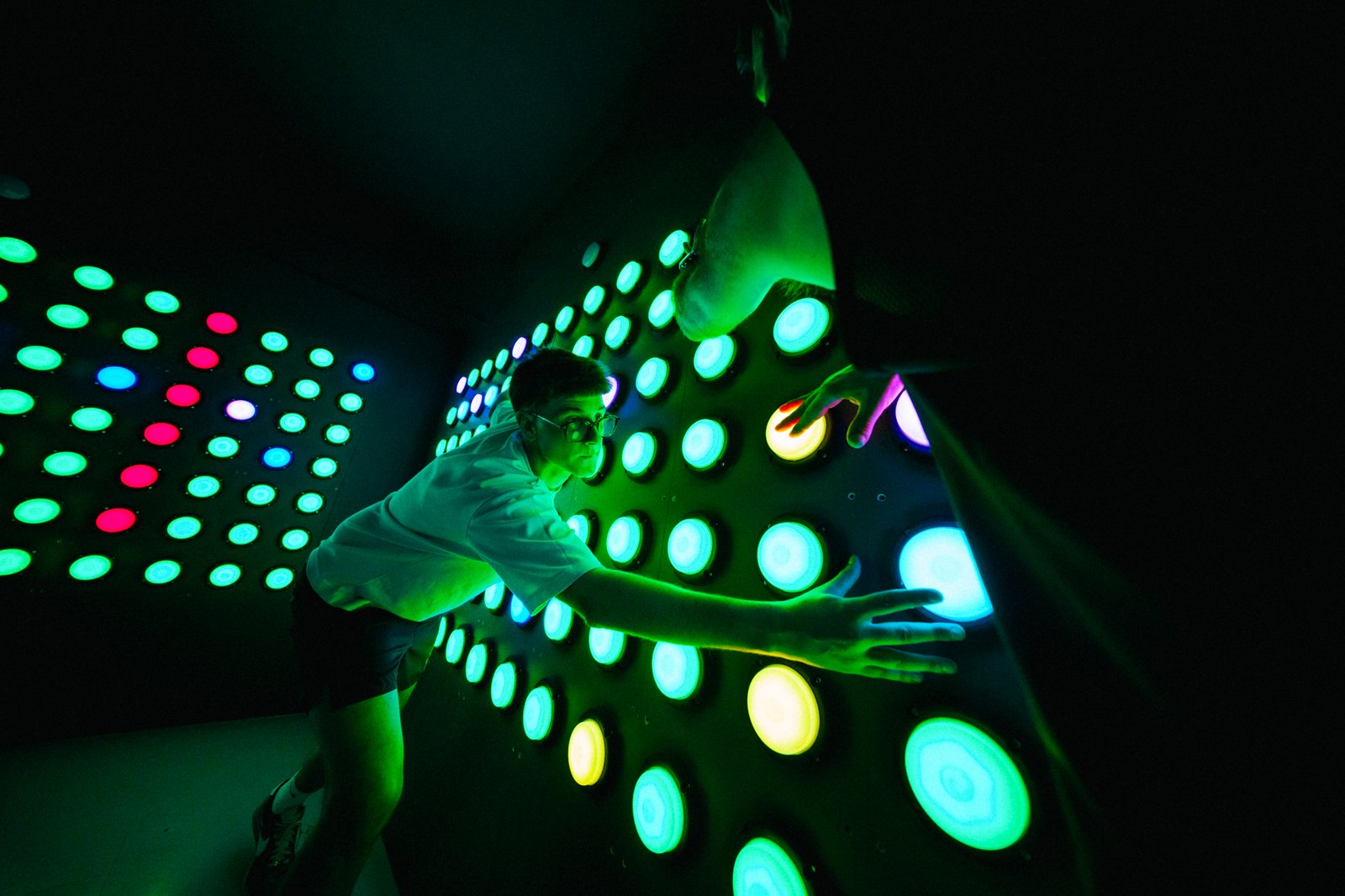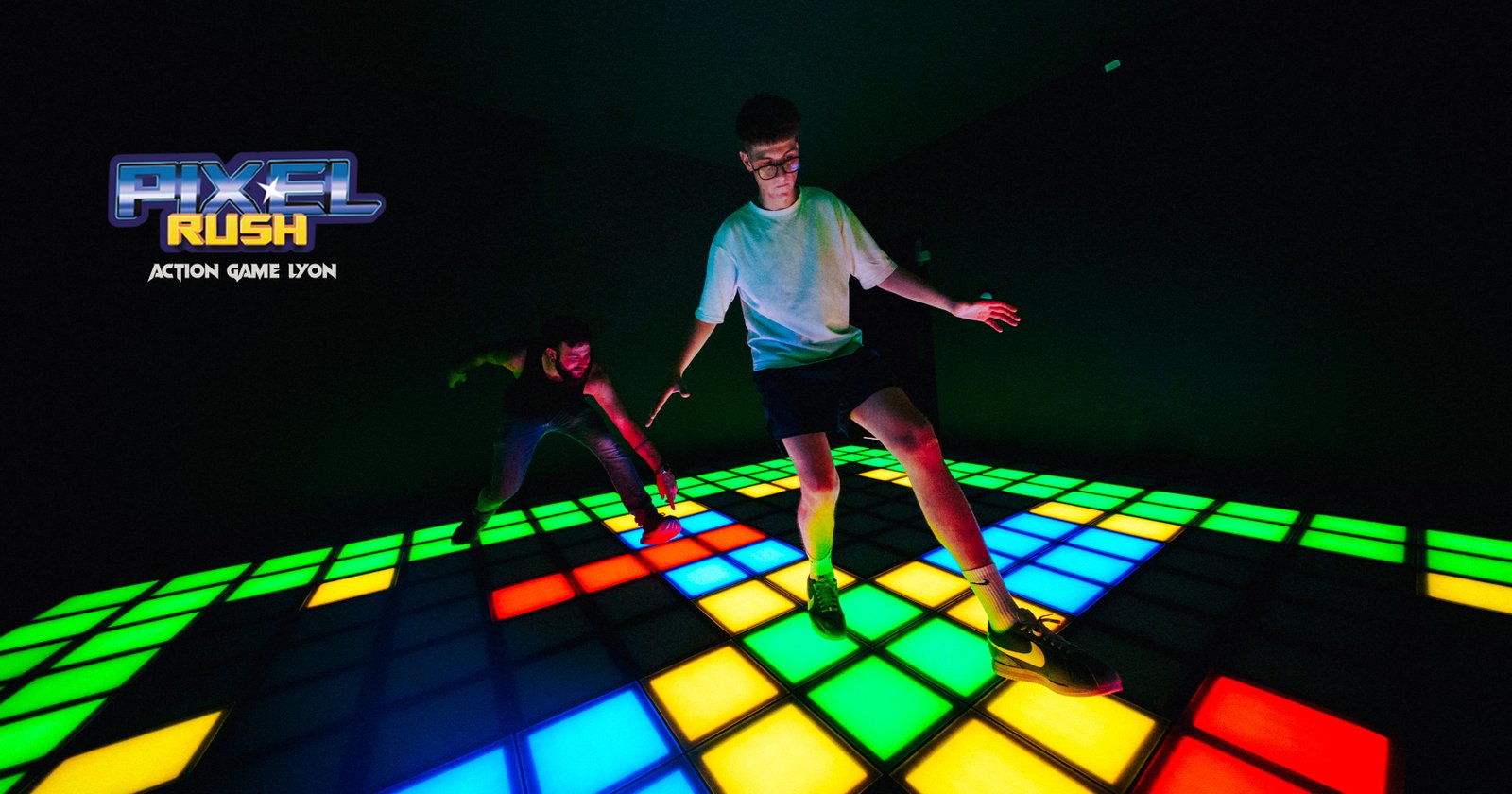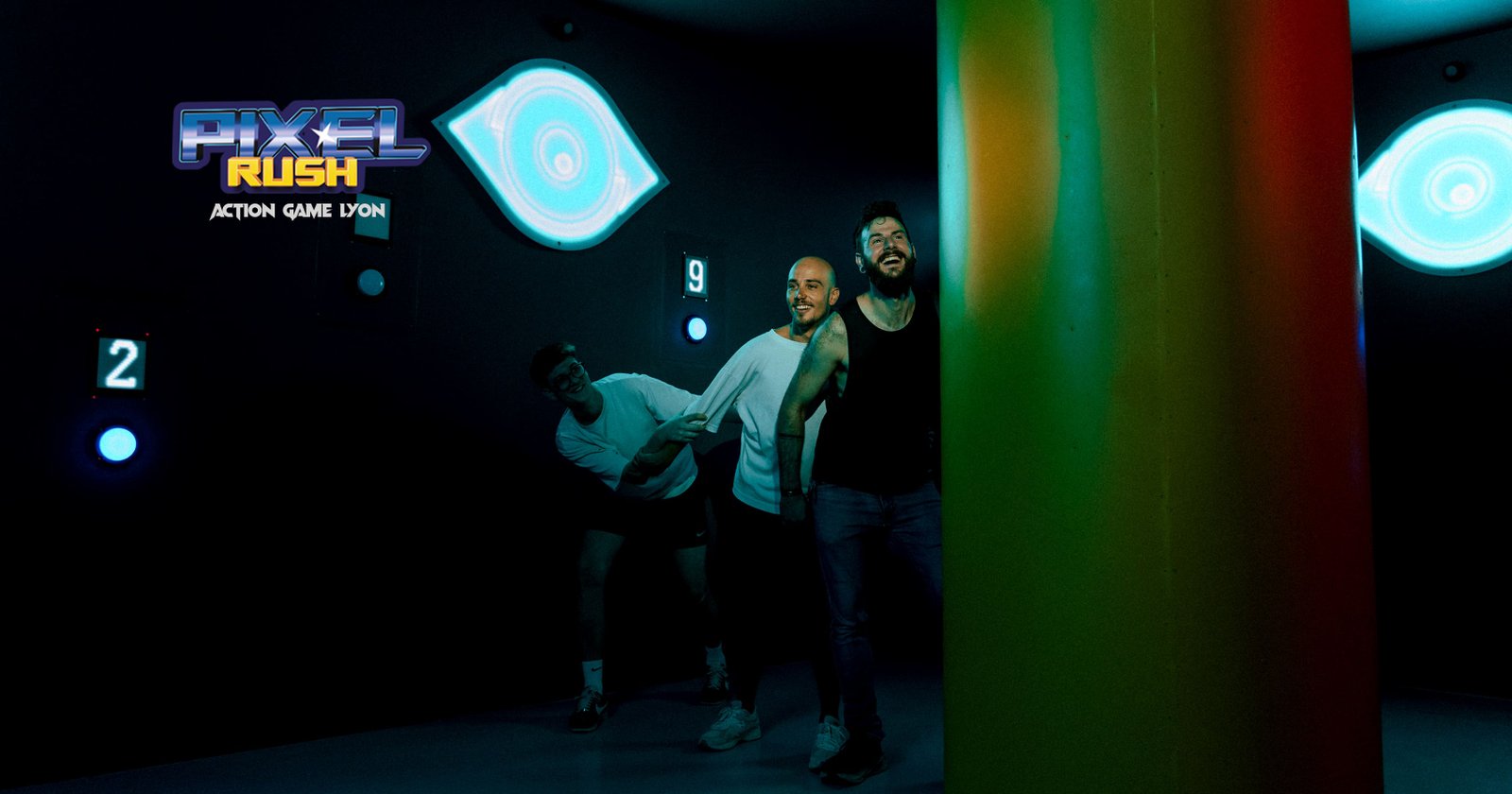
Vous êtes-vous déjà demandé pourquoi, après une session d'action game, vous vous sentez si bien ? Cette sensation d'euphorie, ce sourire difficile à effacer, cette énergie retrouvée... tout cela n'est pas le fruit du hasard. La science nous révèle aujourd'hui que les action games, ces espaces de jeux interactifs où l'on combine activité physique, défis intellectuels et interactions sociales, déclenchent de véritables réactions chimiques dans notre cerveau qui nous rendent littéralement plus heureux. Chez Pixel Rush, nous avons créé un complexe unique où nos visiteurs relèvent des défis variés dans huit salles thématiques différentes. Mais au-delà du simple divertissement, qu'est-ce qui se passe réellement dans votre corps et votre esprit lorsque vous évitez des lasers ou grimpez sur un mur interactif ? C’est ce que nous allons voir dans cet article.
RÉSERVEZ VOTRE SESSION MAINTENANT !
1. L’action game, le terrain de jeu idéal pour votre cerveau
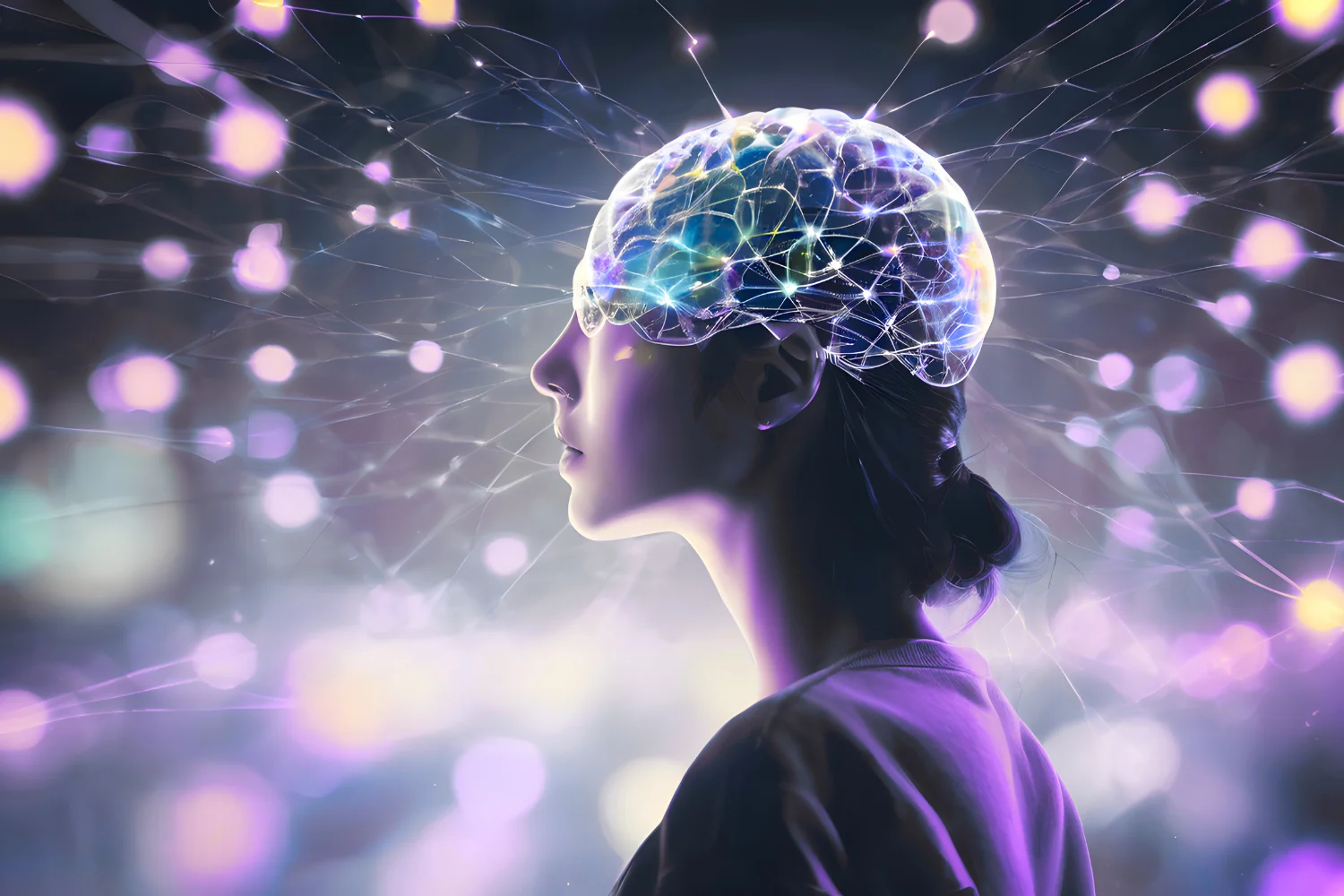
Lorsqu’on entre dans une salle d’action game, les sens s’aiguisent, le rythme cardiaque s’accélère, la concentration se fixe sur l’instant. Et c’est là que la magie biologique opère. Chaque action réussie, un tir au bon moment, un mur franchi, un défi mental relevé, provoque une réaction chimique mesurable. Le cerveau libère un cocktail précis de neurotransmetteurs qui influencent directement l’humeur, la motivation et le niveau d’énergie. Les voici :
-
La dopamine, déclenchée par la récompense immédiate du jeu (score, victoire, buzzer), nourrit la motivation et la sensation de plaisir.
-
Les endorphines, sécrétées pendant l’effort physique, réduisent la douleur et provoquent une euphorie naturelle.
-
L’ocytocine, l’hormone du lien social, s’active lorsque vous coopérez ou encouragez vos coéquipiers.
-
La sérotonine, enfin, stabilise l’humeur et prolonge le sentiment de bien-être après la partie.
Résultat ? En moins d’une heure, le corps entre dans un état de détente dynamique : vous bougez, riez, bref, vous vous amusez comme des fous.
2. Le flow : l’état de bonheur absolu provoqué par l’action game
Vous avez peut-être déjà vécu ça. Ce moment suspendu où le temps semble s’arrêter, où vos gestes s’enchaînent avec précision, où votre esprit est concentré et où chaque seconde devient à la fois intense et légère. Tout paraît fluide, naturel, parfaitement à sa place.
C’est ce qu’on appelle le flow.
Ce concept, popularisé par le psychologue hongrois Mihály Csíkszentmihályi, décrit un état mental optimal dans lequel nous sommes totalement absorbés par une activité. On ne pense plus aux soucis du quotidien ou à nos obligations. Et c’est exactement ce que provoque un action game comme Pixel Rush, grâce à une alchimie millimétrée entre défis physiques, stimulation mentale et interaction sociale.

3. L’action game, une arme anti-stress validée par la science
On parle souvent du stress comme d’un ennemi à combattre.
Pourtant, il n’est pas toujours nocif.
En réalité, le stress devient toxique lorsqu’il s’installe durablement, lorsqu’il ronge le sommeil, la concentration et la motivation.
Mais à petites doses, il peut au contraire être bénéfique, voire nécessaire.
Et c’est exactement ce qui se produit dans un action game.
Lorsqu’on participe à un action game, le cerveau ne perçoit pas la situation comme dangereuse, mais comme stimulante. Il s’agit d’un stress bref, positif et ponctuel.
Face à un défi, une salle à franchir ou un chrono qui tourne, le corps déclenche une réponse physiologique immédiate :
-
le rythme cardiaque augmente,
-
la respiration s’accélère,
-
les pupilles se dilatent,
-
et une petite dose d’adrénaline est libérée.
Cette réaction n’a rien d’alarmant : elle permet au contraire d’activer vos capacités physiques et mentales. L’adrénaline affine la concentration, améliore les réflexes et renforce la vigilance. C’est ce qu’on appelle parfois le “stress de performance” : celui qui mobilise vos ressources, vous rend plus rapide, plus précis, plus vif.
Dans le cadre d’un action game, cet état est parfaitement encadré. Les défis sont ludiques, les risques inexistants, le décor est rassurant. Votre cerveau comprend rapidement qu’il s’agit d’un stress contrôlé. Résultat : il profite de tous les effets bénéfiques de cette montée d’énergie.
Une fois la session terminée, tout le système nerveux opère un changement de phase. C’est ce que les neuroscientifiques appellent le rebond parasympathique : le corps quitte le mode “action” pour revenir au mode “repos”.
Concrètement, la fréquence cardiaque ralentit, la respiration se calme et la pression artérielle diminue. Les muscles, après avoir été sollicités, se relâchent progressivement.
Et dans le cerveau, la production d’adrénaline cesse, tandis que les endorphines et la sérotonine prennent le relais. C’est une fatigue saine, comme après un footing ou une bonne séance de sport, mais accompagnée d’un sentiment d’accomplissement et d’un regain d’énergie mentale.
RÉSERVEZ VOTRE SESSION MAINTENANT !
4. Le pouvoir social de l’action game : quand le bonheur devient collectif
Le bonheur, ce n’est pas qu’une affaire de chimie.
C’est aussi, et peut-être surtout, une histoire de lien humain.
Depuis toujours, notre cerveau est programmé pour chercher la connexion : appartenir à un groupe, coopérer, partager des émotions. Les neurosciences sociales l’ont prouvé : les interactions positives, un sourire, un rire, un encouragement , activent les mêmes circuits cérébraux que ceux du plaisir. Et c’est exactement ce que l’on retrouve dans un action game. Dès qu’on entre dans la salle, une dynamique naturelle s’installe. On se parle, on se coordonne et on s’amuse, tout simplement.
Au cœur de ce processus, une hormone joue un rôle clé : l’ocytocine. Souvent appelée “hormone de la confiance”, elle est libérée lorsqu’on échange un geste amical, une tape sur l’épaule, ou même un simple sourire. Lorsque vous coopérez pour résoudre une épreuve ou que vous célébrez une victoire commune, votre cerveau libère aussi cette hormone, renforçant le sentiment de sécurité émotionnelle et de solidarité. C’est elle qui explique cette sensation unique de cohésion que l’on ressent en sortant d’une session.
Chez Pixel Rush, cette dimension sociale est au cœur de l’expérience. Les salles sont pensées pour encourager la coopération, pas la compétition. Vous gagnez ensemble, vous progressez ensemble, et surtout… vous riez ensemble.
5. L’action game, un moteur de confiance et d'estime de soi
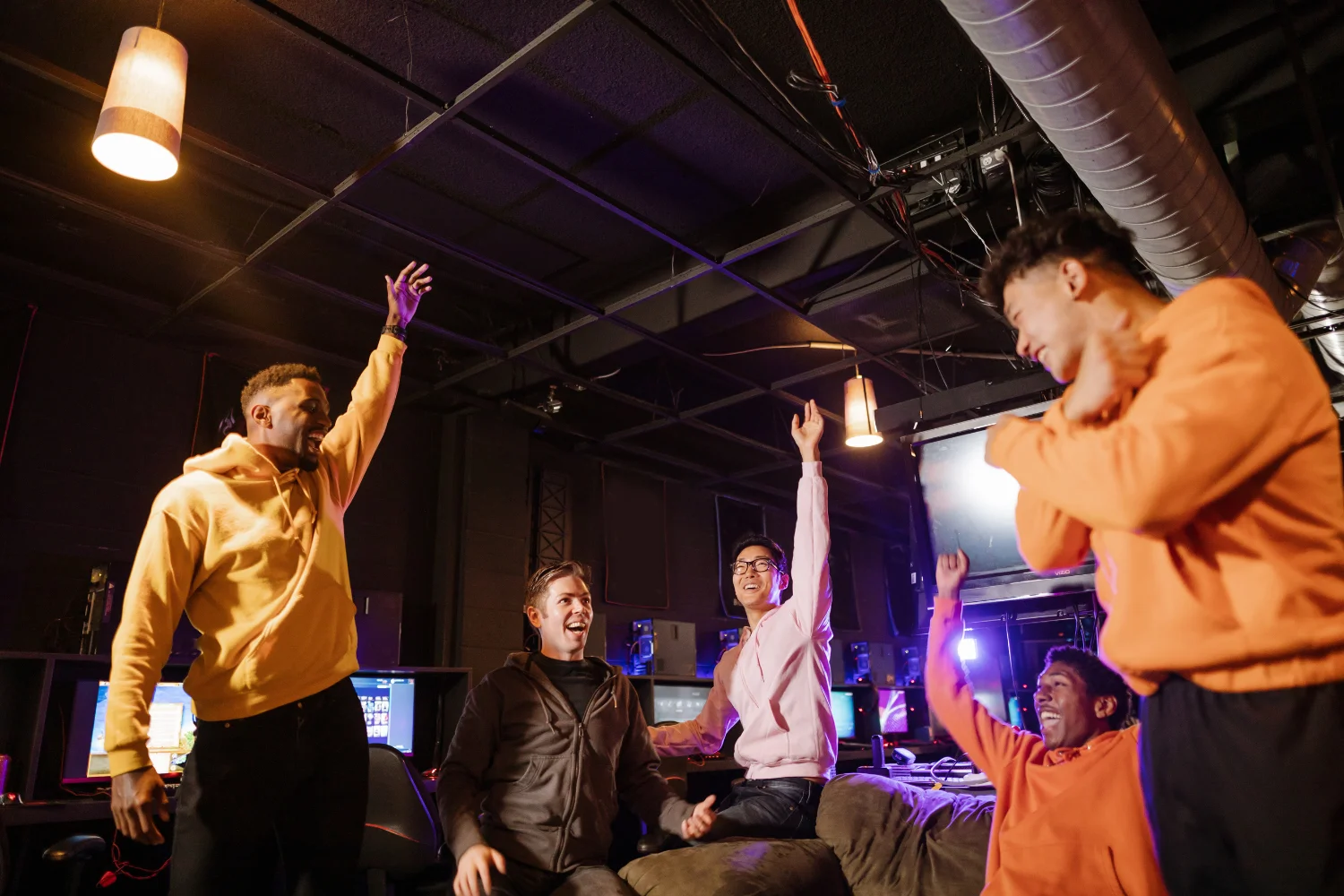
Dans un action game, on vit généralement une succession de micro-réussites. Ces petits accomplissements s’enchaînent, presque sans qu’on y pense, et chacun d’eux envoie un signal positif au cerveau. À chaque défi relevé, le cerveau sécrète de le dopamine, l’hormone de la satisfaction et de la récompense. Et cette cascade chimique ne s’arrête pas là. La réussite, même modeste, renforce la confiance dans ses propres capacités. Peu à peu, le corps se détend, le mental s’apaise et un phénomène de renforcement positif s’installe. On ne se focalise plus sur ce qu’on ne sait pas faire, mais sur tout ce qu’on vient d’accomplir.
Ce mécanisme n’est pas qu’une impression : il est observé et documenté en psychologie.
Les chercheurs parlent ici d’auto-efficacité, un concept développé par le psychologue Albert Bandura. L’auto-efficacité, c’est cette conviction intime que l’on a le pouvoir d’agir sur les événements, qu’on est capable d’influencer les résultats par ses propres actions.
Et c’est précisément ce que permet un action game. Chaque salle, chaque défi, chaque essai réussi renforce cette conviction.
Conclusion
Au fond, le bonheur n’est pas qu’une émotion passagère. C’est une réaction en chaîne : un mélange d’énergie, de mouvement et de plaisir partagé.
L’action game réunit tout cela.
C’est un espace d’expression totale, où l’on peut se défouler, réfléchir, rire, se dépasser.
Et ce mélange d’émotions, d’adrénaline et de satisfaction crée un effet puissant : vous ressortez plus léger, plus confiant, plus heureux.
Chez Pixel Rush, nous avons conçu nos 8 salles thématiques pour vous faire vivre cette montée d’énergie positive, ce sentiment d’immersion totale qu’on ne retrouve nulle part ailleurs. Ici, on grimpe, on saute, on esquive, on rit et sans même s’en rendre compte, on recharge ses batteries mentales, on relâche le stress et on réactive la confiance en soi.
Le mieux pour comprendre tout cela, c’est de le vivre.
Réservez dès maintenant votre session en cliquant sur le bouton ci-dessous 👇 :