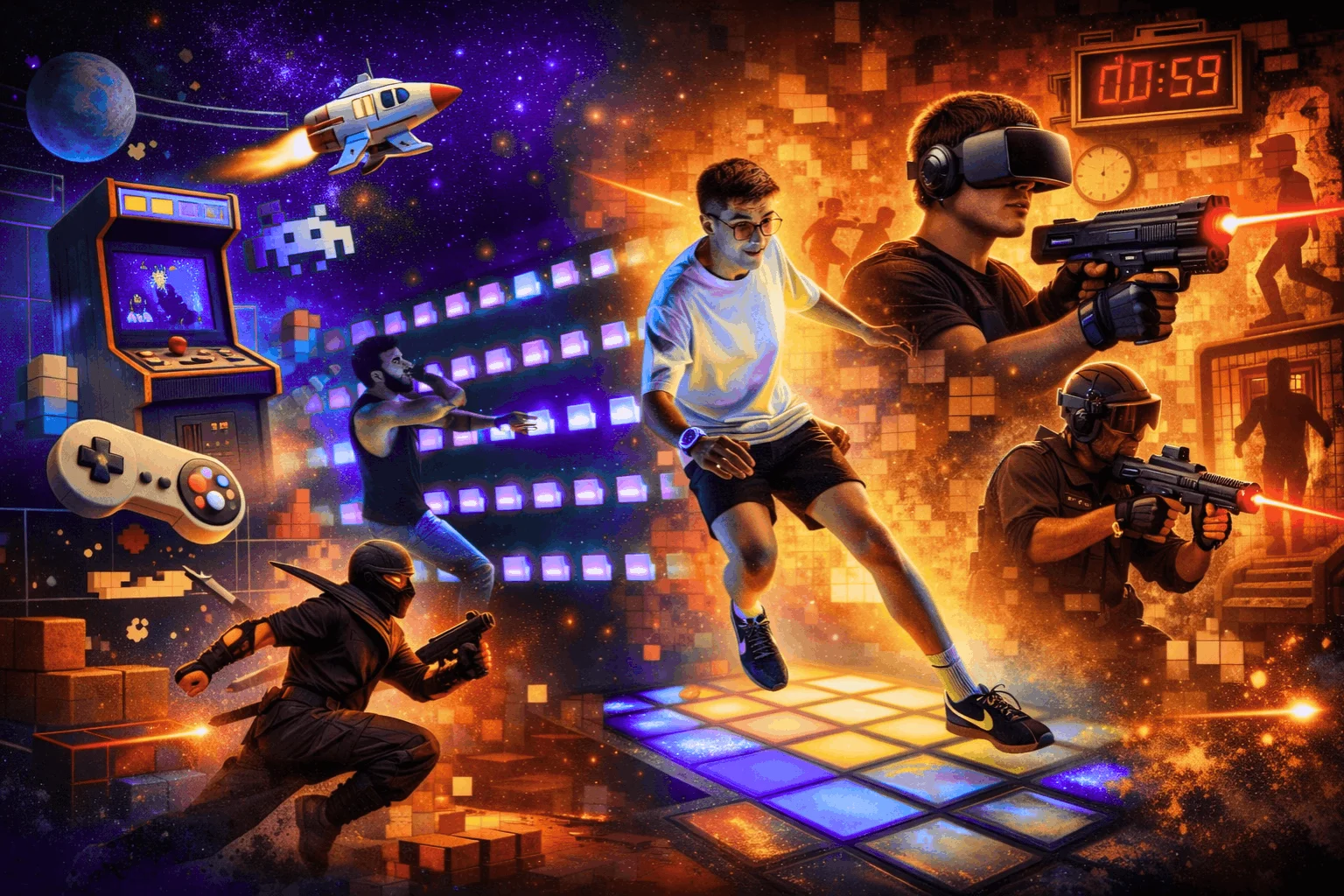
Vous vous êtes déjà demandé comment on est passés de manettes collées entre les mains à des joueurs qui courent, sautent et esquivent comme des ninjas dans des labyrinthes grandeur nature ? Installez-vous confortablement et prenez des pop-corn car aujourd’hui on va vous raconter l'histoire des action games.
RÉSERVEZ VOTRE SESSION MAINTENANT !
Aux Origines : Quand les Pixels S'Animaient
Les Premiers Jeux d'Action Vidéo
Bon, on va pas se mentir, tout a commencé avec des trucs un peu basiques. Dans les années 1950, les premiers jeux électroniques, c'était vraiment pas fou visuellement. Imaginez : Tennis for Two en 1958, un jeu de tennis sur un oscilloscope. Oui, vous avez bien lu, un oscilloscope. Mais c'était déjà ça : l'idée de l'action en temps réel était née.
Puis en 1962, boum, Spacewar! débarque au MIT. Trois étudiants qui s'ennuyaient (enfin, qui étaient surtout géniaux) ont créé le premier jeu d'action multijoueur de l'histoire. Deux vaisseaux spatiaux qui se tirent dessus dans l'espace, ce qui était vraiment visionnaire pour l'époque ! C'était même le premier tournoi e-sport en 1972 avec les "Spacewar! Olympics". Respect aux ancêtres !
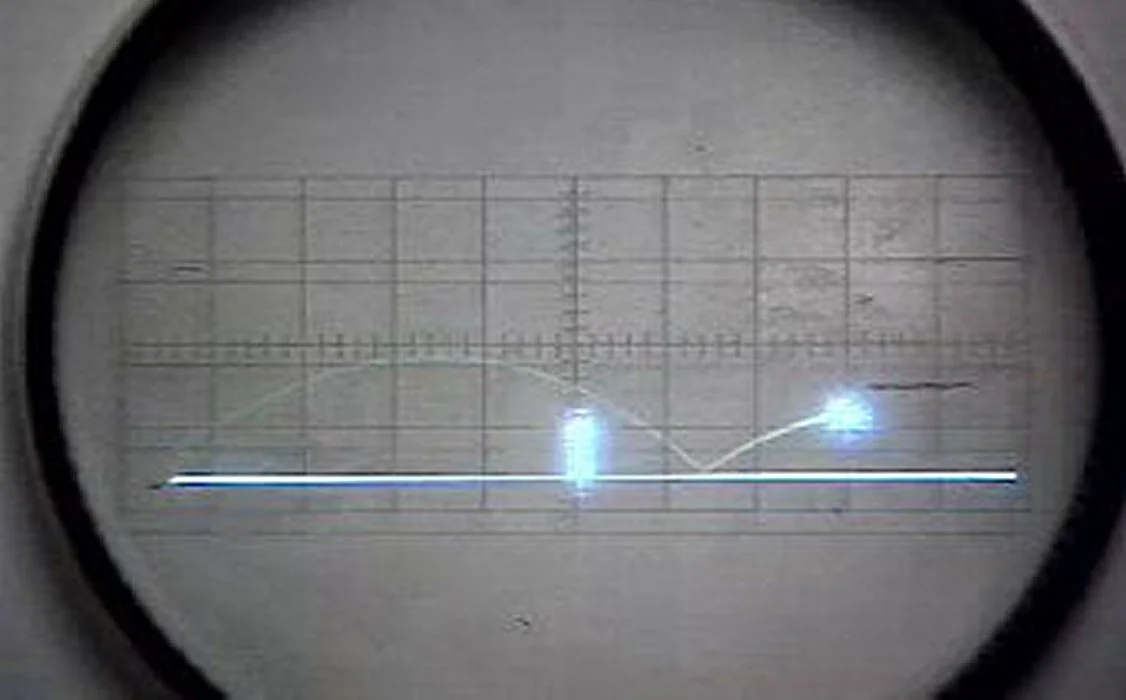
Tennis for Two (1958)
L'Âge d'Or des Arcades
Les années 70-80, c'est LA période où les jeux d'action ont explosé. Les salles d'arcade, c'était LE spot où traîner. Pong (1972), Space Invaders (1978), Pac-Man (1980)... Ces jeux ont posé les bases de ce qu'on appelle aujourd'hui les "action games" : des réflexes, de la vitesse, de l'adrénaline !
Puis en 1992, un jeu change TOUT : Wolfenstein 3D. Le premier véritable FPS (First Person Shooter) avec une vue à la première personne. Pour la première fois, vous êtes dans le jeu, vous voyez par les yeux du héros. L'immersion monte d'un cran !
Un an plus tard, Doom arrive et met le feu. Atmosphère flippante, graphismes travaillés, ambiance sonore assez dingue pour l’époque... Les joueurs découvrent ce que ça fait d'avoir les mains moites devant son écran. L'action devient viscérale, intense, addictive. On ne joue plus POUR jouer, on joue pour VIVRE quelque chose.
Les Années 90-2000 : La 3D et l'Immersion Totale
Avec l'arrivée de la 3D vers 1995, les jeux d'action prennent une nouvelle dimension, littéralement ! Les joueurs peuvent désormais se déplacer dans trois directions au lieu de deux. Les mondes deviennent plus réalistes, plus complexes, plus immersifs.
GTA III en 2001 révolutionne le concept de liberté d'action. Un monde ouvert où vous faites ce que vous voulez, quand vous voulez. Counter-Strike devient LE jeu multijoueur en ligne de référence. Les FPS se multiplient : Halo, Call of Duty, Half-Life... L'action vidéoludique est à son apogée.
Le Grand Saut : Du Virtuel au Réel
Le Précurseur : Le Laser Game (1984)
Alors là, attention, on touche à un truc crucial dans l'histoire des action games. En 1977, un américain nommé George Carter III regarde Star Wars au ciné. Et là, BOOM, illumination divine ! Il se dit : "Et si on pouvait jouer à ça pour de vrai ?"
Il passe sept ans à bosser sur son concept et en 1984, il ouvre le premier centre Photon à Dallas, Texas. Le concept est génial : un canon laser relié à une batterie, une armure avec des capteurs qui détectent les impacts, un ordinateur central qui gère tout. Vous touchez quelqu'un ? Son arme se désactive temporairement. Ça vous fait penser à quelque chose ?
George Carter ne se contente pas de créer un jeu, il imagine des décors futuristes, une ambiance musicale techno, toute une expérience immersive. Le succès est fulgurant aux États-Unis. En 1986, le laser game est né.

Le laser game arrive en Europe et en France
En 1992 ouvre le tout premier centre de laser game français : Zapatak à Clermont-Ferrand. En 1995, Megazone Laser Games ouvre à Lyon. Et en1996, révolution : Patrick Fournier crée Laser Game Evolution à Grenoble, avec une innovation : la technologie 100% laser (au lieu de l'infrarouge). Plus précis, plus exigeant, plus intense !
Aujourd'hui, la France compte plus de 300 salles de laser game..
Pourquoi c'était révolutionnaire ?
Le laser game, c'est le concept qui a prouvé qu'on pouvait transformer un jeu vidéo en activité physique réelle. Les gens ne regardent plus l'action, ils la vivent. Ils courent, ils se planquent, élaborent des stratégies, ils transpirent. C'est le pont parfait entre le gaming et la réalité.
RÉSERVEZ VOTRE SESSION MAINTENANT !
L'Escape Game : Quand les Énigmes Deviennent Réelles (2007)
En 2007, le japonais Takao Kato, fondateur de la société SCRAP à Kyoto, transforme les jeux d'évasion vidéo ("escape the room" sur PC) en expérience grandeur nature.
Le concept : vous êtes enfermés dans une salle thématique avec vos potes et vous avez 60 minutes pour résoudre des énigmes et vous échapper. Au départ, c'étaient juste des énigmes sur papier. Puis rapidement, des cadenas, des mécanismes cachés, des puzzles électroniques... L'immersion devient de plus en plus folle.
L'invasion mondiale des escape games
En 2011, ParaPark ouvre en Hongrie et devient le premier escape game en Europe. En 2012 HintHunt s'installe à Londres puis à Paris en 2013 et devient le premier escape game français.
Tout commence en 2011, lorsqu’un concept totalement inédit voit le jour en Hongrie : ParaPark. Pour la première fois en Europe, des joueurs sont enfermés dans une pièce et doivent résoudre des énigmes pour en sortir. L’escape game vient de naître… et le succès est immédiat.
Un an plus tard, en 2012, le concept traverse les frontières. HintHunt s’installe à Londres avant d’ouvrir une salle à Paris en 2013. C’est une première : l’escape game arrive officiellement en France, et marque un tournant décisif dans l’évolution des loisirs immersifs.
En 2016, un escape game ouvre tous les trois jours en France ! En 2020, on compte plus de 800 salles partout en France, soit environ 2 450 salles pour 874 enseignes en 2023.
Les escape games ont apporté quelque chose de nouveau : la réflexion active. Ce n'est plus juste courir et tirer, c'est observer, analyser, manipuler des objets, résoudre des casse-têtes en équipe. L'immersion passe par le décor, l'ambiance, parfois même des acteurs costumés. Vous n'êtes plus devant un écran, vous êtes dans le scénario.
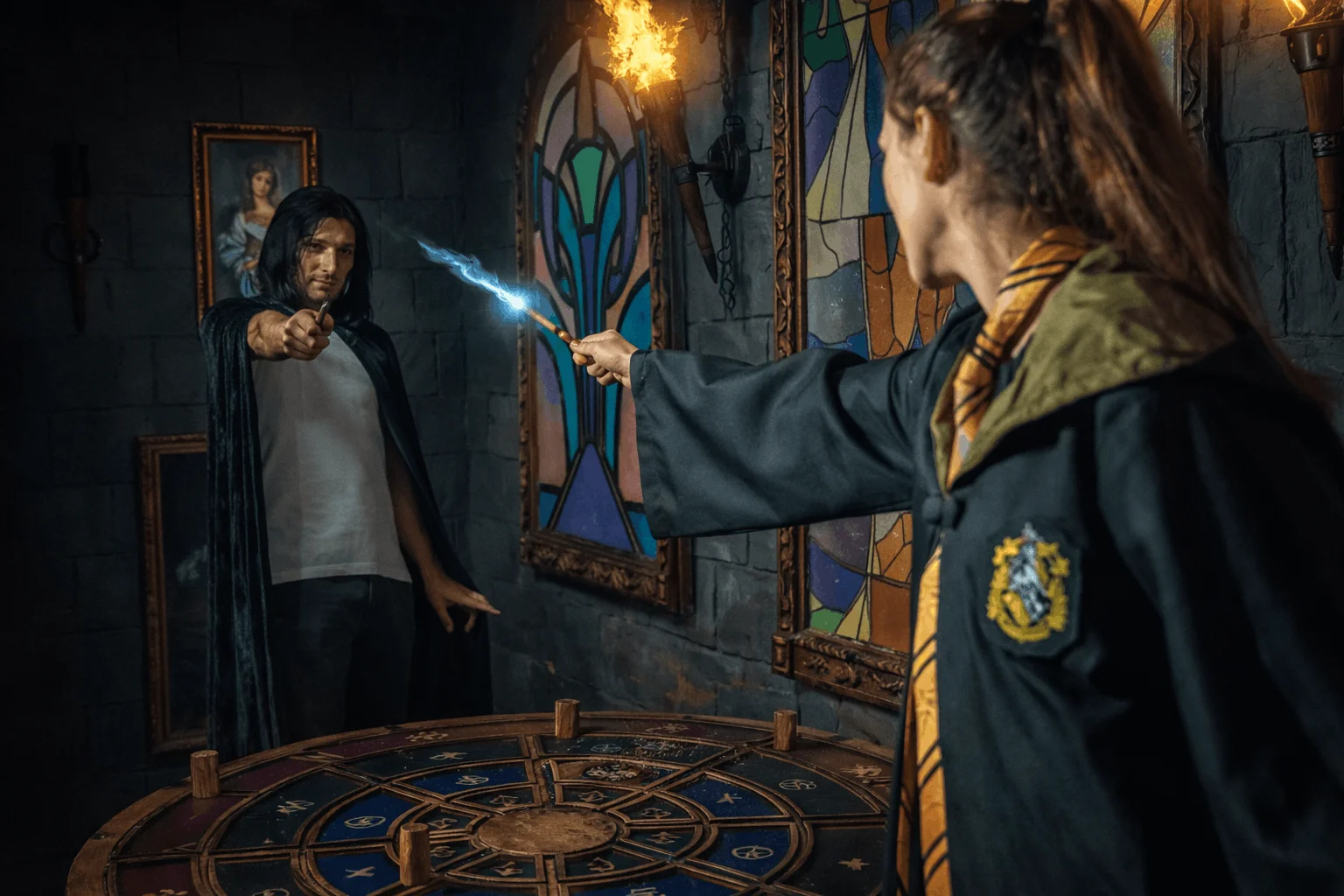
Intervalle - Escape game Lyon
La Réalité Virtuelle : Le Chaînon Manquant (2010)
Parallèlement, un autre mouvement se développe : la VR (réalité virtuelle). Avec des casques comme l'Oculus Rift ou le PlayStation VR, les joueurs peuvent enfin être dans le jeu physiquement.
Des centres de VR ouvrent partout : vous enfilez un casque, vous prenez des manettes, et vous voilà propulsé dans des mondes fantastiques. Vous combattez des zombies, explorez des planètes, résolvez des énigmes... Le tout en bougeant réellement.
La VR, c'est le mix parfait entre le jeu vidéo et l'activité physique. Vous bougez, vous transpirez, mais vous êtes aussi dans un univers virtuel ultra immersif.
RÉSERVEZ VOTRE SESSION MAINTENANT !
L'Avènement des Action Games Modernes (2010-2026)
On vient de vous parler du laser game, des escape games et de la VR. Ce sont des activités qui ont chacune apporté quelque chose :
-
Le laser game → l'action physique en temps réel
-
L'escape game → l'immersion dans un scénario, le travail d'équipe
-
La VR → la technologie interactive
Mais les action games, c'est différent. C'est la fusion de tout ça !
Un action game moderne (comme Pixel Rush), c'est :
-
Des défis physiques variés : courir, sauter, esquiver, grimper, viser…
-
Des réflexes en temps réel : réagir vite, être précis, coordonner ses mouvements
-
De la stratégie d'équipe : communiquer, s'entraider, se répartir les rôles
-
De la technologie embarquée : capteurs, bracelets connectés, sols interactifs, scoring live
-
Une immersion totale : décors, lumières, musiques, ambiances thématiques
-
Plusieurs univers de jeu : 5, 8, 10 salles différentes (en fonction de l'action game) avec des défis uniques
-
Des modes multiples : coopération OU compétition, différents niveaux de difficulté
La grosse différence ?
-
Laser game = un seul type d'action (tirer au laser) dans un labyrinthe
-
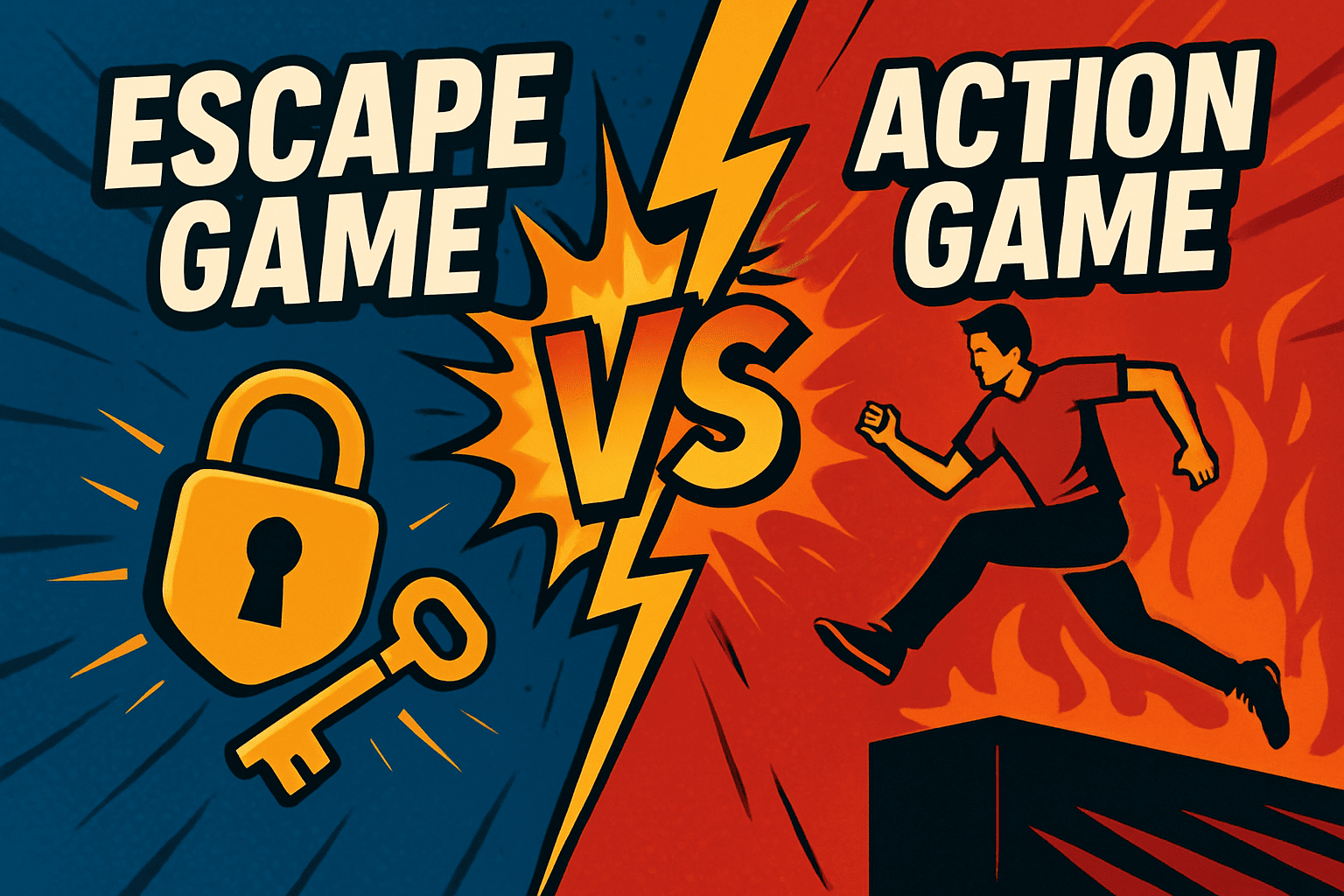
Escape game = principalement de la réflexion et des énigmes
-
VR = casque sur la tête, vous êtes dans un monde virtuel
-
ACTION GAME = plein de défis physiques différents, sans casque, dans des salles réelles hyper high-tech
Comment les Action Games Sont Nés : La Convergence (2010-2020)
Les action games n'ont pas été inventés du jour au lendemain. C'est la convergence de plusieurs tendances qui a donné naissance à ce concept entre 2010 et 2020.
Pendant que le laser game et les escape games cartonnent, d'autres concepts apparaissent :
Les parcours Ninja Warrior : Inspirés de l'émission télé japonaise, ces parcours d'obstacles testent force, agilité et équilibre. Des centres comme Warrior Adventure à Lyon ouvrent et rencontrent un franc succès. Pour la première fois, on ne joue plus à un jeu unique, mais on enchaîne plusieurs épreuves physiques différentes.
Les trampoline parks : des grandes salles avec des trampolines, des parcours d'obstacles, des arènes gonflables, des murs d'escalade... L'idée c'est de multiplier les zones de jeu pour offrir de la variété. Vous ne faites pas que du trampoline, vous alternez entre différentes activités.
Les complexes multi-activités : Des lieux qui regroupent karting + laser game + escape game + bowling + VR.
Ces concepts ont montré qu'on pouvait mixer plusieurs types de défis, créer des espaces XXL avec différentes zones et utiliser la technologie pour suivre les performances des joueurs.
Les Innovations Récentes (2024-2026)
Les action games modernes intègrent des technologies de pointe :
- Les bracelets connectés qui trackent vos performances : temps, précision, score, calories brûlées...
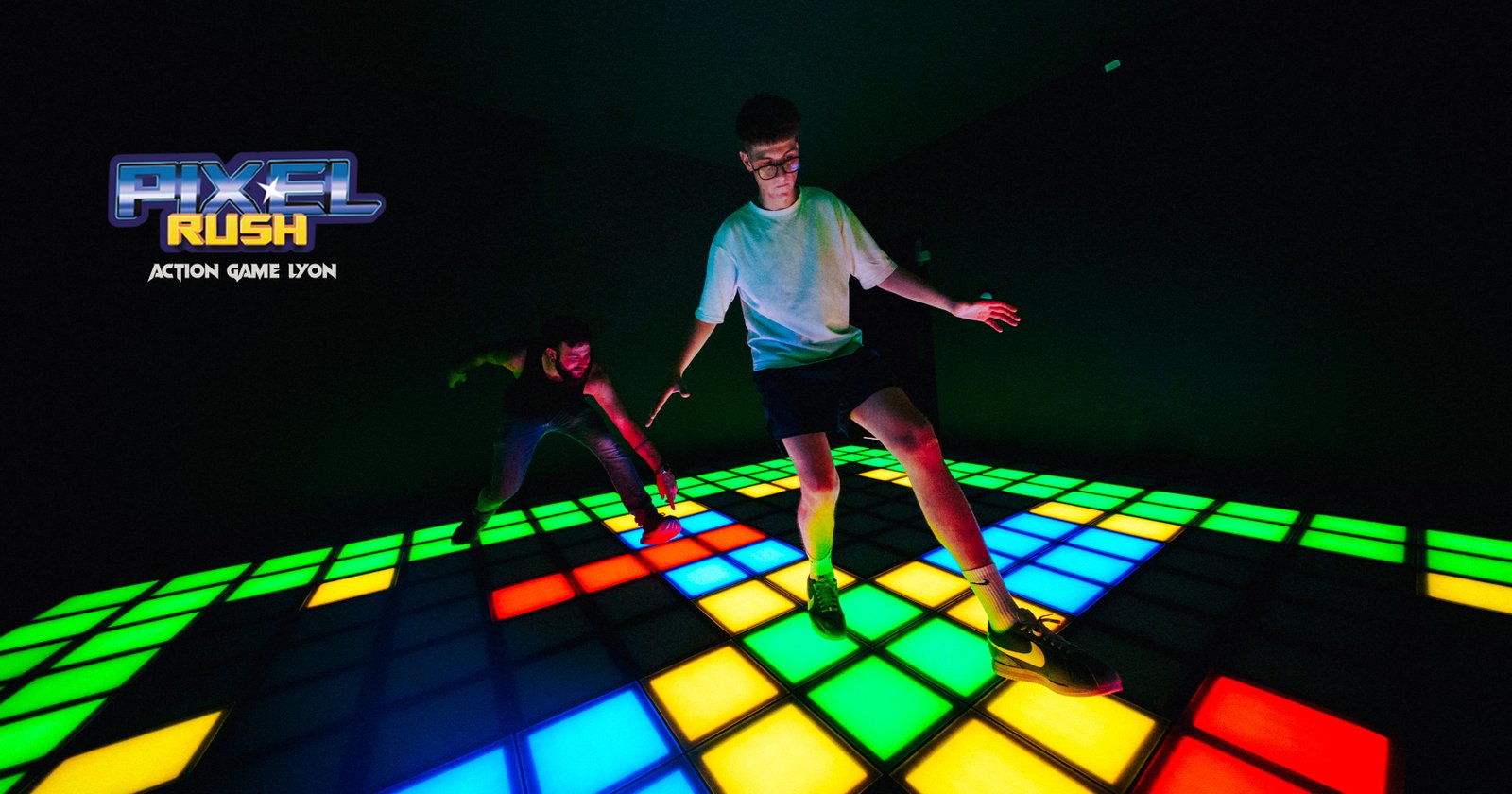
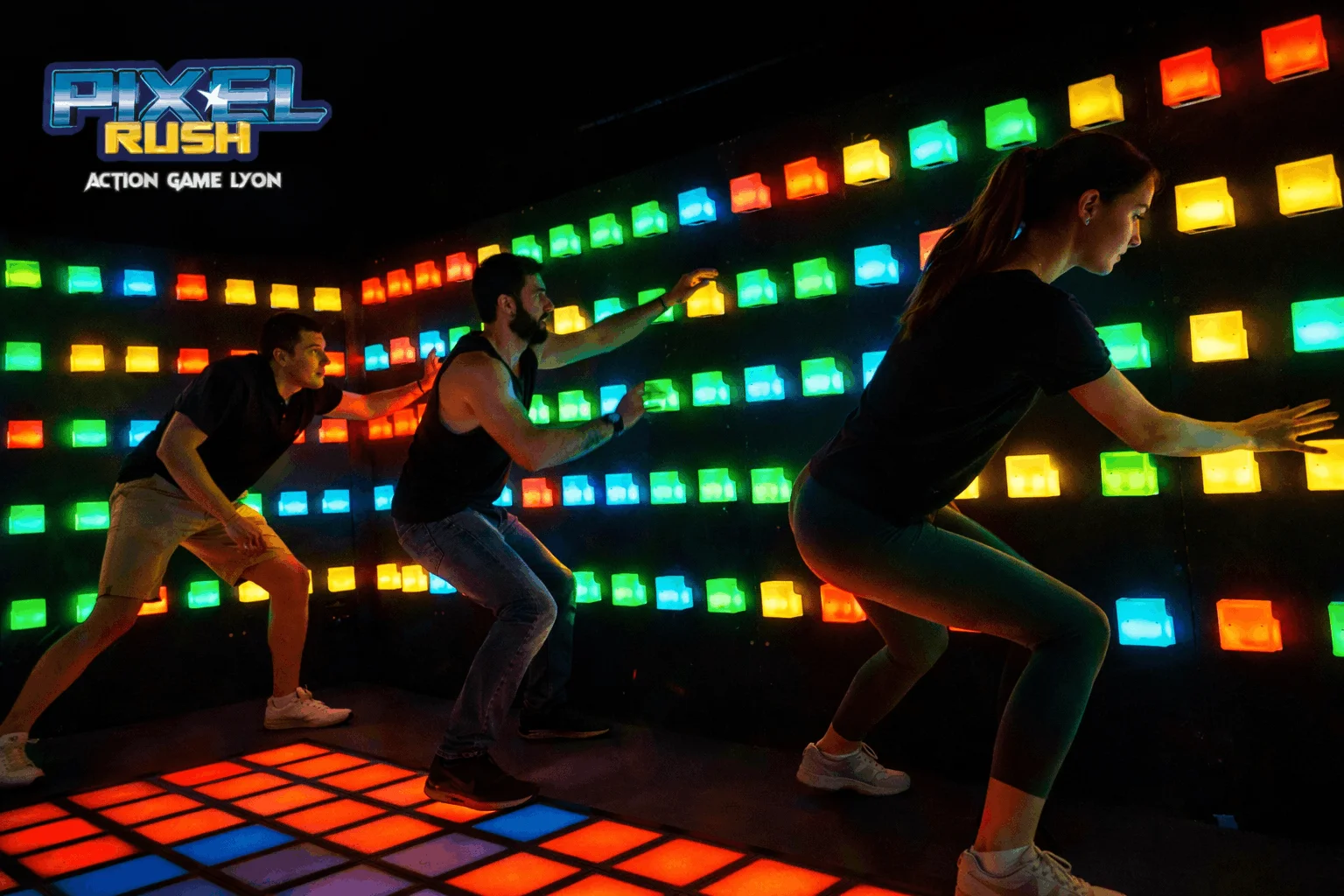
- Des écrans interactifs et des sols numériques intelligents qui réagissent instantanément à vos mouvements. Un pas, un saut, un coup porté au sol… et l’environnement répond. Chaque action physique déclenche une réaction directe dans le jeu, brouillant un peu plus la frontière entre le réel et le virtuel
- Les scoring en temps réel
- Les scénarios immersifs avec des univers variés
Pixel Rush Lyon : L'Action Game Nouvelle Génération
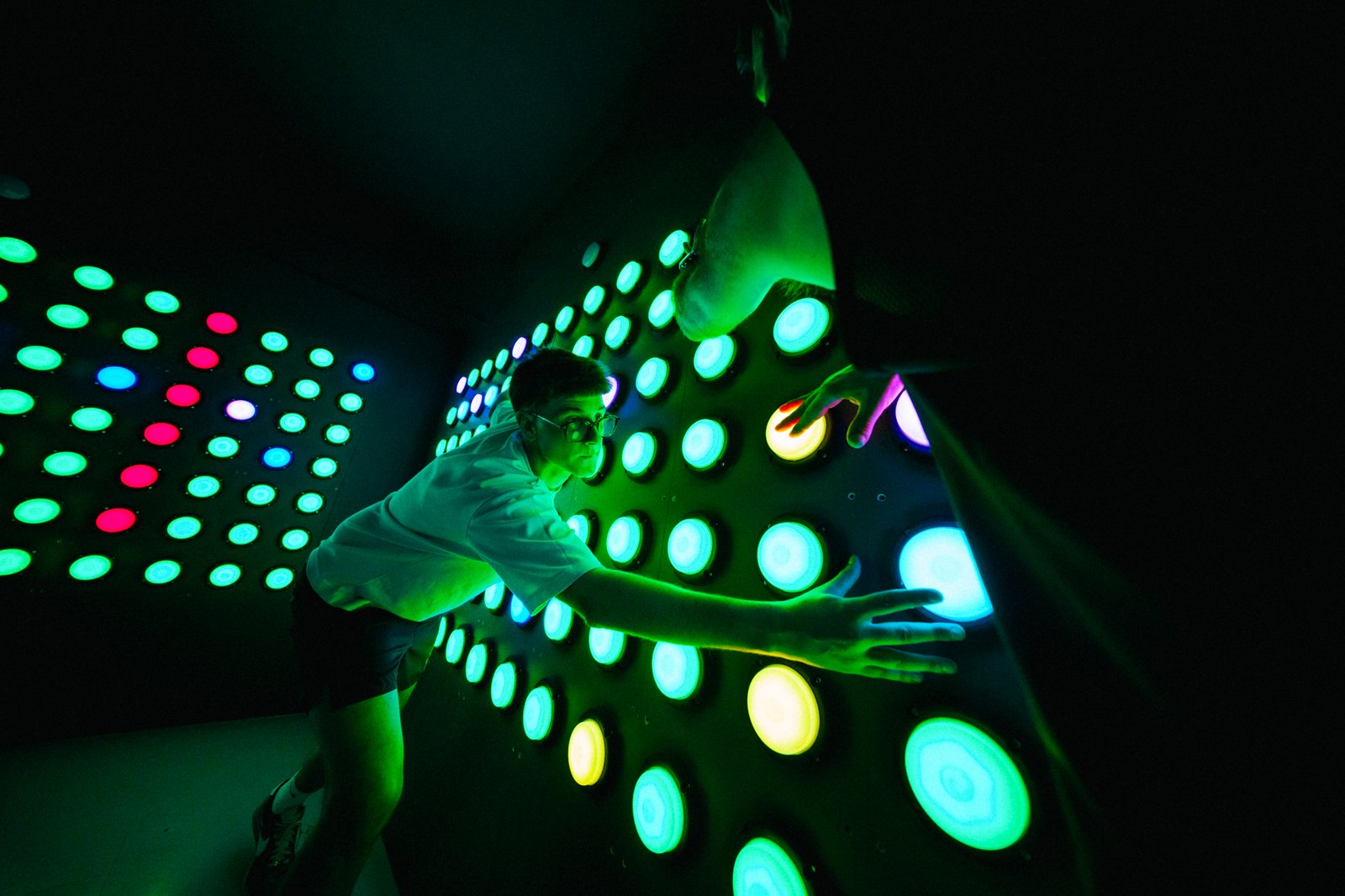
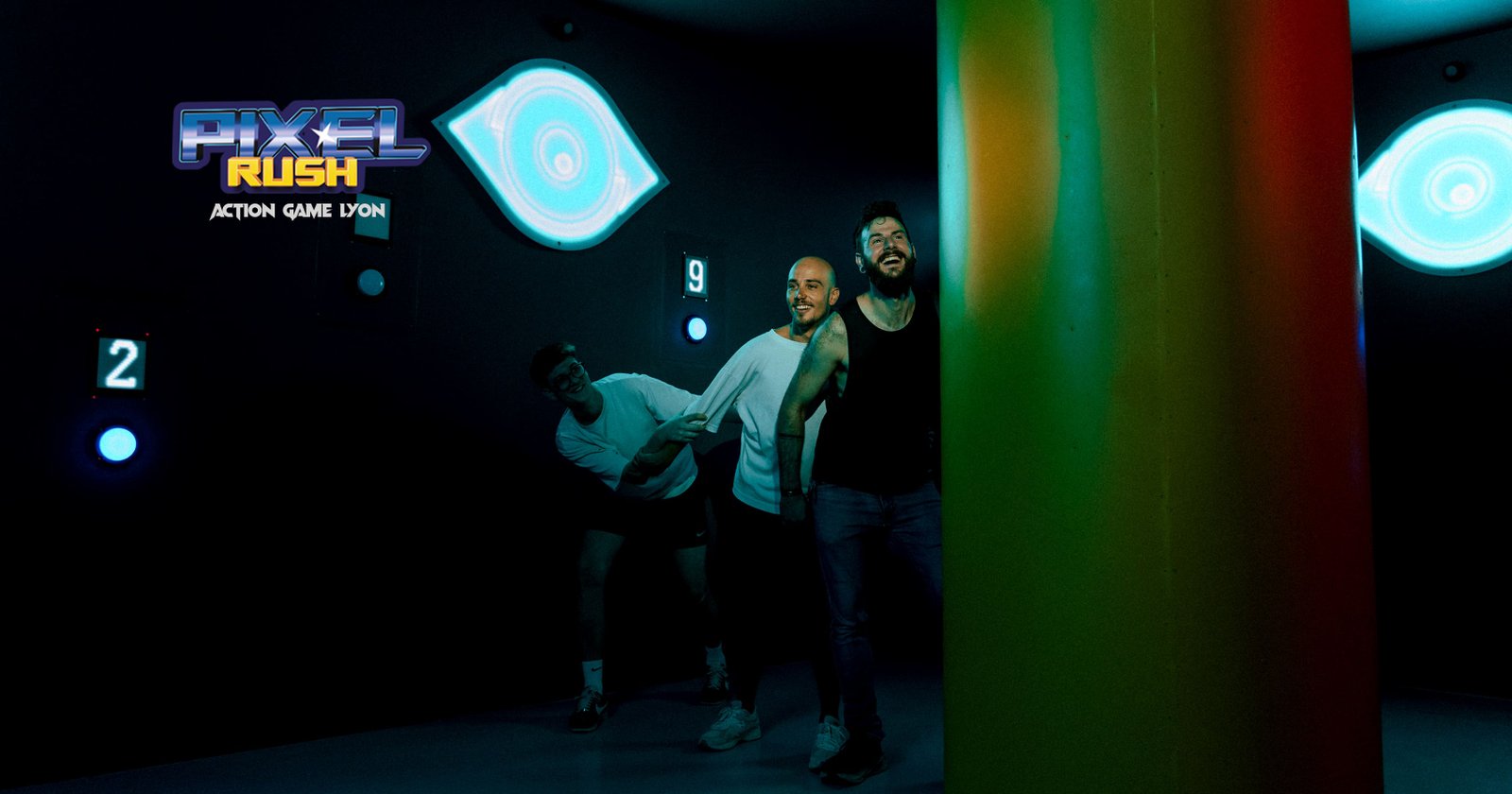
On ne pouvait PAS terminer cet article sans vous parler de notre action game, Pixel Rush. Situé au 10 rue Thomas Blanchet, dans le 8ᵉ arrondissement de Lyon, Pixel Rush propose une expérience totale où le joueur n’est plus spectateur, mais acteur à part entière. Ici, on ne vient pas “jouer à un jeu”, on entre dans un univers.
Avec 8 salles à thème uniques, Pixel Rush offre bien plus qu’un simple parcours : chaque salle possède sa propre ambiance, ses mécaniques de jeu, ses défis et son rythme. Action, réflexion, coordination, rapidité… chaque expérience sollicite des compétences différentes. Résultat : vous pouvez revenir encore et encore, sans jamais revivre la même partie.
La technologie est au cœur de l’expérience, mais toujours au service du plaisir. Bracelets connectés, capteurs ultra-précis, scoring en temps réel, écrans interactifs et sols réactifs transforment chaque mouvement en action de jeu.
Enfin, Pixel Rush a été pensé pour tous les profils. Gamer passionné, sportif, famille, groupe d’amis ou entreprises : les niveaux de difficulté s’adaptent, les défis se modulent et chacun trouve sa place. Que vous veniez pour performer, vous défouler ou simplement partager un moment unique, l’expérience s’ajuste à votre façon de jouer.
L’histoire des action games : Conclusion
Voilà, vous savez tout ! De Tennis for Two en 1958 à Pixel Rush en 2026, on a fait un sacré chemin. Les jeux d'action sont littéralement sortis de nos écrans pour devenir notre nouvelle façon de s'amuser, de bouger, de se challenger. L'histoire des action games, c'est l'histoire d'une évolution constante. De simples pixels sur un écran aux salles ultra-immersives d'aujourd'hui, le principe est resté le même : offrir de l'excitation, du challenge, de l'évasion. Mais les moyens, eux, ont explosé. Et franchement, on a hâte de voir ce que les 10 prochaines années vont apporter. Des salles qui s'adaptent en temps réel ? Des univers en réalité mixte encore plus dingues ? Des intégrations avec l'IA qui créent des expériences uniques pour chaque joueur ?
Une chose est sûre : le voyage ne fait que commencer. Alors, vous attendez quoi ? Sortez de chez vous, lâchez votre manette, et venez vivre l'action pour de vrai !
RÉSERVEZ VOTRE SESSION MAINTENANT !
Lire aussi :
Action Game vs Escape Game : quelles différences et lequel choisir à Lyon ?
Quelle différence entre un Action Game et un Laser Game ?
Pourquoi l'action game rend heureux ? (et c'est prouvé par la science)
Comment les Action Game améliorent la concentration et les réflexes ?
← Retour aux articles