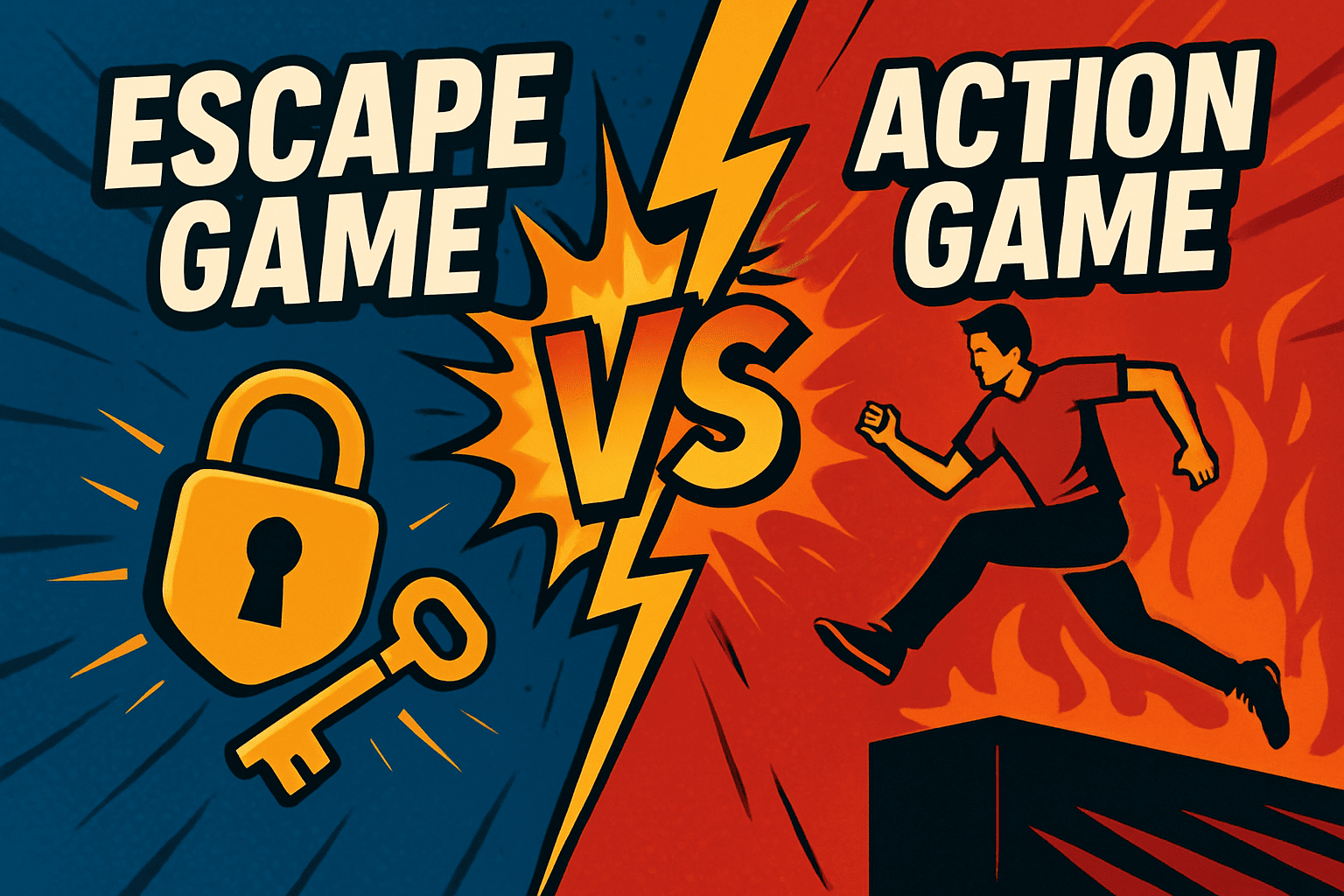

Les action game font partie de ces expériences qu’on n’oublie pas. Dès que la porte se referme, l’ambiance s’électrise : lumières, sons, défis… tout est pensé pour plonger les participants dans un univers immersif où le corps et l’esprit doivent fonctionner à l’unisson. Mais, comme pour toute activité nouvelle, les débutants commettent souvent les mêmes erreurs. Certains se laissent submerger par l’adrénaline, d’autres oublient de jouer en équipe ou n'observent pas suffisamment. Si vous préparez votre première session, ou que vous voulez simplement vous améliorer, voici les erreurs les plus fréquentes dans les action game et surtout comment les éviter pour vivre une expérience fluide et agréable.
1. Croire qu’un action game est juste un “escape game avec plus de mouvement”
C’est sans doute le malentendu le plus courant. Beaucoup de joueurs pensent qu’un action game n’est qu’un escape game où l’on bouge un peu plus. En réalité, c'est un peu plus compliqué que ça. Dans les action game, on ne résout pas uniquement des énigmes. On enchaîne des défis physiques, sensoriels et technologiques, le plus souvent chronométrés. En gros, il faut réagir vite, coopérer et surtout être suffisamment performants pour gagner. Ce mélange d’activité physique et de réflexion rend l’expérience plus intense que dans un escape game classique.
RÉSERVEZ VOTRE SESSION MAINTENANT !
2. Porter une tenue inadaptée
Dans les action game, vous courez, rampez, manipulez des objets dans des environnement souvent sombres et bruyants. De nombreux joueurs portent des jeans moulants, des chemises serrés voir des talons pour les filles, en pensant passer une heure tranquille. Si vous voulez maximiser vos performances dans les actions, le bon réflexe est de porter des vêtements légers et souples dans lesquels vous vous sentez à l'aise, et surtout de bonnes baskets.
3. Jouer en solo
Un action game est avant tout un jeu d'équipe. Pourtant, beaucoup de joueurs tombent dans le piège du “chacun pour soi”. Pris dans le feu de l'action, ils courent, crient, essaient plusieurs choses en même temps et se dispersent, sans écouter ou parler avec les membres de leur équipe. Pour éviter ça, prenez 30 secondes pour discuter stratégie avant le début de la partie. Cela permet de répartir les rôles mais aussi de renforcer la cohésion d'équipe.

4. Se précipiter sans observer
Quand on entre dans un action game, que les lumières s'allument de tous les côtés et que le chrono démarre, la tentation est forte de foncer sans réfléchir. C'est une erreur classique. Les joueurs débutants perdent souvent un temps précieux à manipuler tout ce qu’ils voient, espérant déclencher quelque chose “par hasard”. L'astuce pour ne pas commettre cette erreur est simplement de prendre quelques secondes pour observer la salle, comprendre la logique du jeu et se familiariser avec l'environnement. Une bonne observation est la clé pour performer dans un action game.
5. Oublier d’écouter le Game Master
Le Game Master, c’est un peu le maître des lieux, votre boussole dans cet univers d’adrénaline et de capteurs lumineux. Il connaît chaque salle, chaque piège, chaque moment où les joueurs ont tendance à perdre leurs moyens. Son rôle n’est pas seulement de lancer la partie mais aussi de vous donner les clés pour en profiter pleinement.
Pourtant, beaucoup de joueurs commettent la même erreur : ils écoutent le briefing d’une oreille distraite, le regard déjà tourné vers la porte d’entrée du jeu. L’impatience prend le dessus et les explications se transforment en simple bruit de fond. Résultat : à peine le chrono lancé, c’est la confusion générale. “On devait faire quoi, déjà ?” est certainement la phrase la plus entendue par le Game Master au début du jeu. Prenez le temps d’écouter attentivement les instructions du Game Master. Ce n’est pas une formalité mais une véritable mise en condition. Les règles qu’il énonce ne servent pas à brider le jeu, au contraire : elles révèlent souvent des indices précieux sur le fonctionnement des salles, les mécaniques cachées ou les erreurs fréquentes à éviter. Et surtout, n'hésitez pas à poser des questions avant de démarrer.
6. S’épuiser dès les premières minutes
Dans un action game, la durée moyenne d’une session est d’environ une heure. Pourtant, la majorité des débutants brûlent toute leur énergie dans les 10 premières minutes. Portés par l’excitation du jeu, ils crient, courent dans tous les sens, s’agitent à chaque signal lumineux… et se retrouvent à bout de souffle avant même la moitié de la partie. Résultat : les réflexes ralentissent, la précision diminue et la communication se délite. L’équipe perd en cohésion au moment même où elle devrait monter en puissance. Si vous ne voulez pas voir votre énergie fondre comme neige au soleil, apprenez à gérer vos efforts dès les premières minutes. Alternez les rôles selon les défis : laissez un coéquipier plus énergique prendre le relais sur une épreuve physique pendant que vous observez ou analysez. Cela permet à chacun de récupérer sans jamais casser le rythme du groupe. Mais attention : gérer son énergie ne veut pas dire jouer mollement. Il s’agit plutôt de trouver le bon tempo, celui qui vous permettra de rester concentré, alerte et efficace jusqu’à la dernière salle, où les défis sont souvent plus corsés.

7. Laisser le stress prendre le dessus
Le chrono défile, les lumières clignotent, la musique s’emballe… et soudain, la pression devient palpable. Dans la frénésie du jeu, le moindre signal lumineux paraît urgent et chaque seconde semble décisive. C’est souvent à ce moment que certains joueurs perdent leurs moyens : ils crient, se coupent la parole, recommencent les mêmes gestes mécaniquement ou oublient complètement leur rôle dans l’équipe. Le stress, dans un action game, fait partie intégrante de l’expérience. Il met les sens en éveil, accélère la prise de décision et rend chaque victoire encore plus belle. Mais mal géré, il peut aussi devenir votre pire ennemi. Trop de tension entraîne des gestes brusques, des erreurs de coordination voire des conflits inutiles entre coéquipiers. En voulant bien faire, on finit souvent par saboter sa propre partie. Pour éviter ça, le mieux est de communiquer avec ses coéquipiers, de marquer des pauses si besoin mais aussi de se rappeler qu'il s'agit avant tout d'un jeu et que vous êtes là pour vous amuser.
RÉSERVEZ VOTRE SESSION MAINTENANT !
8. Vouloir “trop bien faire”
Dans chaque équipe, il y a toujours le perfectionniste : celui qui veut tout comprendre, tout réussir, tout contrôler. Il analyse chaque signal, donne des consignes à tout le monde et cherche à optimiser le moindre geste. L’intention est bonne… mais dans un action game, cette quête de perfection se retourne souvent contre lui. Dans un action game, la perfection n’existe pas. C'est un jeu vivant, imprévisible, parfois chaotique où tout peut changer en une fraction de seconde. On court, on rate, on improvise, on recommence. Vouloir tout maîtriser, c’est aller à l’encontre de l’esprit même du jeu : un savant mélange d’adrénaline, de spontanéité et de fun. À force de vouloir “trop bien faire”, certains joueurs se crispent, s’énervent ou deviennent trop exigeants avec eux-mêmes ou leurs coéquipiers. Le bon réflexe à adopter est simplement de lâcher prise, de s'amuser et d'accepter de faire des erreurs car cela fait partie intégrante du jeu.
9. Oublier le bon sens et la sécurité
L’énergie d’un action game peut vite vous emporter. Entre la musique qui s’intensifie, les signaux lumineux qui clignotent et l’adrénaline qui monte, certains joueurs se laissent complètement happer par l’ambiance. C’est grisant, mais aussi trompeur : dans le feu de l’action, on oublie parfois le bon sens le plus élémentaire. Et c’est là que les erreurs arrivent. Pris par l’excitation, certains essaient de grimper sur un décor, forcer une trappe ou d'ouvrir une porte verrouillée. D’autres courent sans regarder, glissent ou se cognent. Sachez qu'un action game est conçu pour être totalement sécurisé, à condition, bien sûr, de respecter les consignes. Chaque élément du décor, chaque objet interactif, chaque zone d’accès a été pensé pour garantir la sécurité des joueurs. Mais dès qu’on agit sans réfléchir, on peut non seulement se blesser mais aussi endommager le matériel et interrompre la partie pour tout le monde. Si une porte résiste, c’est qu’elle n’a pas vocation à être ouverte. Si un objet semble fragile, inutile d’y toucher. Les salles sont pensées pour vous mettre à l’épreuve, pas pour tester votre force. Et surtout, ne courez pas sans regarder. L’espace est immersif, souvent sombre ou ponctué d’obstacles et un faux pas peut vite arriver.

10. Négliger le débrief
La partie se termine, le chrono s'arrête, les lumières se rallument...et déjà, les rires fusent. Certains se félicitent, d'autres rejouent la scène de leur plus beau moment, ou de leur plus belle bourde, avant de filer vers la sortie. Et c'est souvent là que se glisse la dernière erreur : partir trop vite, sans prendre vraiment le temps de débriefer. Pourtant, le débrief n’est pas une simple formalité : c’est la dernière étape du jeu, celle qui permet de transformer une bonne partie en une expérience vraiment enrichissante. C’est le moment où l’on rejoue mentalement chaque défi, où l’on comprend ce qui a fonctionné, ce qui a coincé, et comment on pourrait faire mieux la prochaine fois. C’est aussi l’occasion d’échanger des rires, des anecdotes et des points de vue que chacun a vécus différemment. Prenez donc quelques minutes pour discuter avec vos coéquipiers et le Game Master. Posez vos questions, revivez les moments forts et partagez vos impressions à chaud.
Chez Pixel Rush, nous voyons chaque semaine des dizaines et des dizaines de joueurs se lancer dans l’aventure avec la même excitation, et souvent, les mêmes petites erreurs. Et c’est normal : dans un Action Game, on apprend en jouant. Notre mission, c’est de faire en sorte que chaque session soit un vrai moment de plaisir, où l’on se dépense, on rit, on se surpasse et surtout, on partage une expérience unique entre amis, collègues ou en famille. Alors maintenant que vous connaissez les erreurs à éviter, il ne vous reste plus qu’à venir les mettre en pratique chez Pixel Rush en cliquant sur le lien ci-dessous 👇 :